Samples

Restaurant Furniture: What Makes a Dining Experience Authentic
I love good restaurants, and judging from my waistline, I might eat out a little more often than I should. But when I say “good restaurants,” I don’t necessarily mean the most expensive places in town.
One of my favorite spots for a bite didn’t even have a name, just “Errol,” a Jamaican man with an old-fashioned barbecue pit next to the bait shop at the Osprey Harbor Marina. I keep my boat there. Few meals are better than Errol’s Jamaican jerk chicken and a cold beer after a day on Sarasota Bay. Sometimes, we’d sit at the picnic table by the bait shop and that’s pretty close to my version of an ideal last meal. That’s where jerk chicken should be enjoyed after all – outside on a picnic table.
But when the meal is more complex, the dining experience needs to align. Restauranteurs, the good ones, are like alchemists: they take a myriad of ingredients, sprinkle in some magic dust, and shake it all up to produce an authentic dining experience. That “shaking up” process includes a ton of details and a lot of hard work.
The Alchemy of Hospitality
In his inspiring book Unreasonable Hospitality, Will Guidara offers a glimpse into the creative but disciplined process of bringing together the back of the house with the front of the house to offer the perfect fine dining experience. It starts with inspired dishes and a focus on top-shelf raw ingredients that work together to tantalize the taste buds. Guidara insists that great food isn’t enough, though. The front of the house, he argues, must be just as impressive if you truly want to deliver an experience guests will savor. From the reservations desk to the server’s attentive eye, from clearing plates to the little after-meal surprises, the service can make or break it.

A Visit to the Culinary Institute of America
My wife, Linse, and I recently visited the Culinary Institute of America (CIA) in Hyde Park, New York, where Mark Erickson, provost and director of food and beverage operations, gave us a tour. The CIA had recently purchased DutchCrafters dining tables and chairs, custom-designed for Farquharson Hall — the “holy of holies” in the culinary world. I was moved to see our furniture in that hall, which was once a Jesuit chapel and today hosts various special moments for the campus.
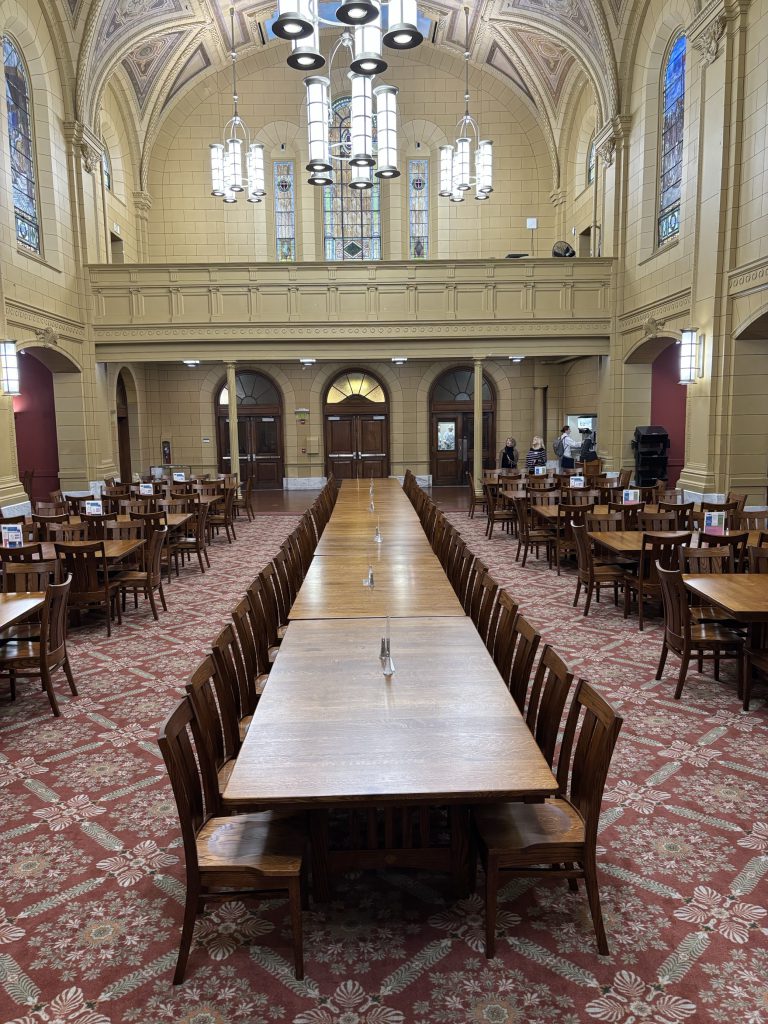
That place might be the epicenter of the culinary world. Students come from all over to learn culinary arts and hospitality at the CIA. As we walked through campus, seeing mostly young people mastering their craft, the resolve for excellence was clear and abundant. So many flavors, sights, sounds, and scents — the product of hard work and top-notch ingredients creating a symphonic experience. Again, alchemy.
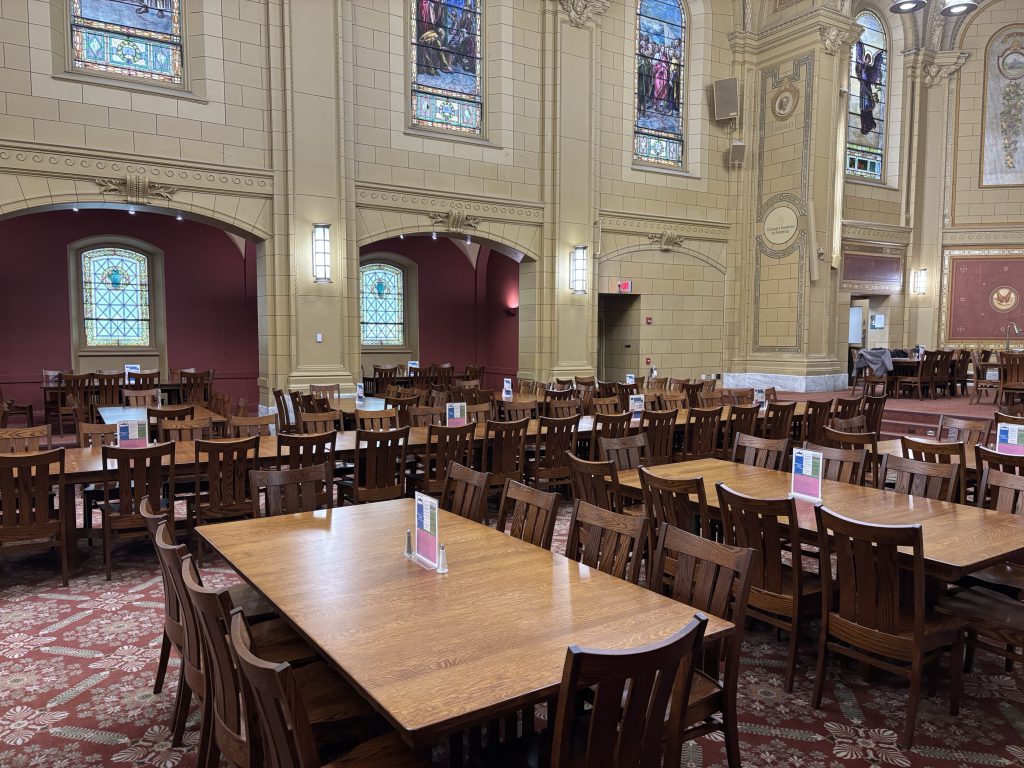
Provost Erickson directed the purchase of DutchCrafters furniture for Farquharson Hall as part of his capstone project before retirement. Why? Because he understood the importance of craft over utilitarian function. A table isn’t just a table — it sets the stage for the entire experience. When so much effort goes into making magic in the kitchen, why present it on an unimpressive veneer table made on a manufacturing line and shipped in a box? Why invite your guests to savor a meal while sitting in uncomfortable chairs that squeak when they lean back?
At DutchCrafters, we believe furniture should support and align with that authentic experience.
Where Authentic Dining and Craftsmanship Meet
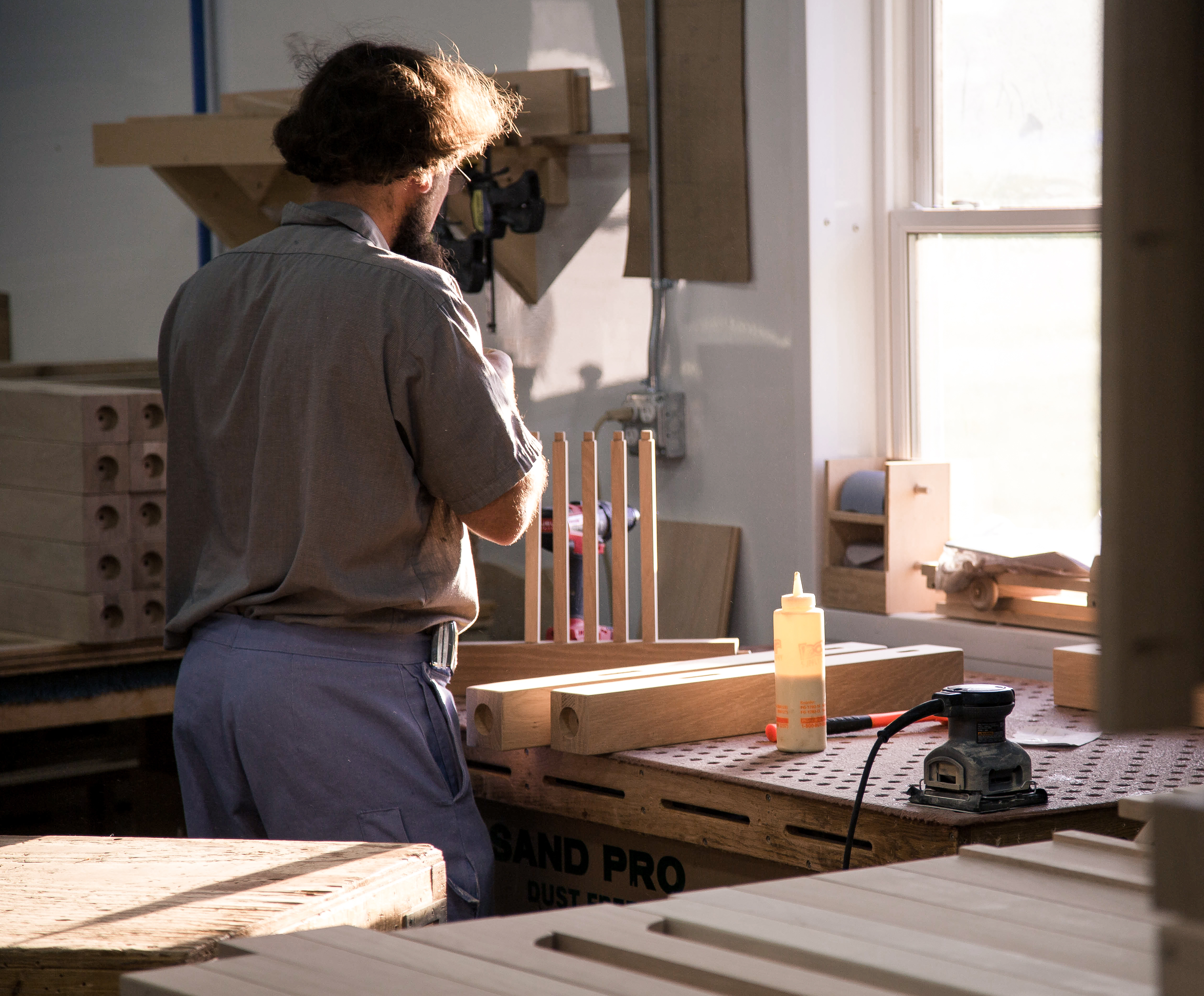
Like a well-crafted meal, DutchCrafters furniture begins with the wholesome ingredients. Our furniture is not manufactured on an assembly line but birthed in small woodshops by master craftsmen who understand the feel of real wood with their hands. The wood is oak, maple, cherry, or walnut — all harvested from American forests. I’ve walked through countless woodshops where the saws are buzzing before dawn, and over and over again have witnessed the authenticity of fine craftsmanship firsthand. The buzzing saws and scent of sawdust are evidence of the creative process, not unlike a busy kitchen.
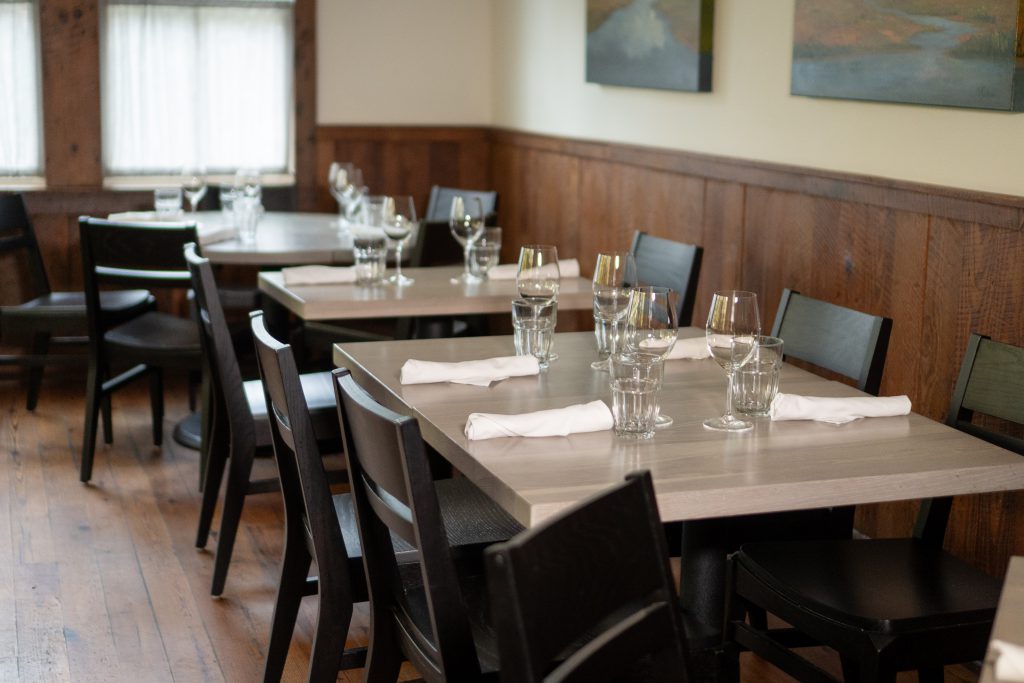
At DutchCrafters, there are no veneers or artificial flavors. Our authentically crafted furniture is beautiful, durable, and functional. You notice this in the way the wood grain balances across a table or how the steam-bent back of a chair fits perfectly into its joints. Attention to detail is even paid to the parts unseen.
The raw materials and the finely crafted end product are clear evidence of integrity. But authenticity is also found in the story itself. Our story of Amish-made furniture is an American story — one of hardworking, honest men and women. Over the last several decades, many Amish families have shifted from farming to other vocations. As a result, the Amish-crafted furniture industry has earned a reputation as the finest source of furniture in the country. The small woodshops in Ohio, Pennsylvania, and Indiana, where fathers and sons work side by side, are a testament to the best in American craftsmanship.
Where Many Restaurants Fall Short
Unfortunately, many restaurants see their furniture as an afterthought. They work so hard to get the meal just right, from the presentation of the entrée to the careful mixology of handcrafted cocktails. They bend over backward to train their hosts, servers, bar staff, and bus staff. They think carefully about the sign out front, the art on the walls, and the lighting…
…and then they buy cheap chairs and tables to save a few bucks.
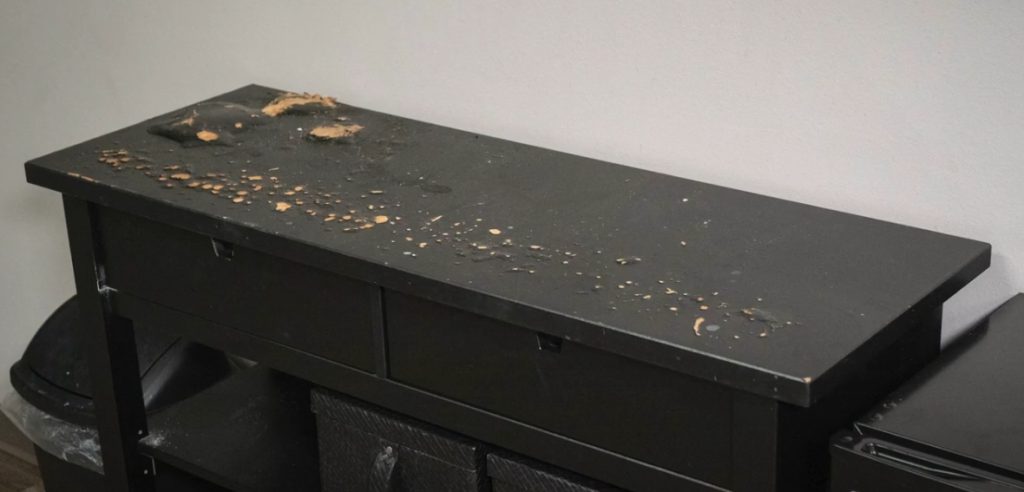
Without naming names, a few of my recent experiences have included:
- One of my favorite restaurants here in Sarasota recently opened a Latin tapas sister establishment. I loved the Spanish grilled cheese, piquillos rellenos, octopus, and flan. The service was top notch, and they kept my water glass filled. The wine list was good. But we sat on uncomfortable wicker chairs that were so mismatched, I could hardly reach the table. Agh.
- I visited a restaurant in Portsmouth, New Hampshire, this winter. Duck Confit? Out of this world. Good prices on really nice wines. The ambiance was comfortable and was a nice change of pace from the more typical seafood restaurants we’d gorged at. Service was spot on. But the table had a copper veneer that literally moved up and down when I pressed it. It moved enough that I was even able to capture it on video. Agh!
- A little further south, in Duck, North Carolina, we enjoyed delicious cocktails and crab cakes while watching the sun settle over Currituck Sound. Our server was friendly, knowledgeable, and attentive. It was the perfect end to a beautiful day. Unfortunately, we sat on wobbly chairs at a table where the veneer was peeling away.
These experiences, while full of great food and beautiful sights, were overshadowed by the not-so-great furniture we sat in.
I’ll say it again. Not every restaurant needs expensive, solid wood furniture to make the experience memorable. But putting more thought into restaurant chairs, bar stools, and tables would go a long way in transforming dining out from a transactional place to eat into an authentic experience of hospitality that can be savored.

This blog post was updated on December 28, 2018 with new entryway table designs. It (almost) goes without saying: Your Read more
We can say, with narrative certainty, that our Amish Makers' love for working with their hands starts young, and with ferocity. Steven Read more
Mark & Sons A fresh new perspective on creation & design comes courtesy of Mark's seven sons, all anxious to Read more

A Guest Post by Interior Designer Emily Wignall We'd like to welcome Emily Wignall to Timber to Table this week, talking Read more